1. Legal status and DDTC compliance
One of the first questions serious buyers ask is whether the lake is DDTC compliant.
DDTC (Déclaration de Détention et de Transport de Carpes) relates to the legal framework surrounding carp ownership and movement in France.
A lake that’s already compliant reduces uncertainty and signals professional, well-documented management.
- Ask for evidence of compliance rather than relying on verbal confirmation.
- Confirm the status of fish stock introductions and any paperwork supporting them.
- Clarify what the buyer will need to maintain going forward (especially if operating commercially).
For a deeper dive into costs, regulations, and common pitfalls, see
Buying a Carp Lake in France: The Ultimate Guide to Costs, Regulations & Red Flags.
2. Fish stock: quality, sustainability, and proof
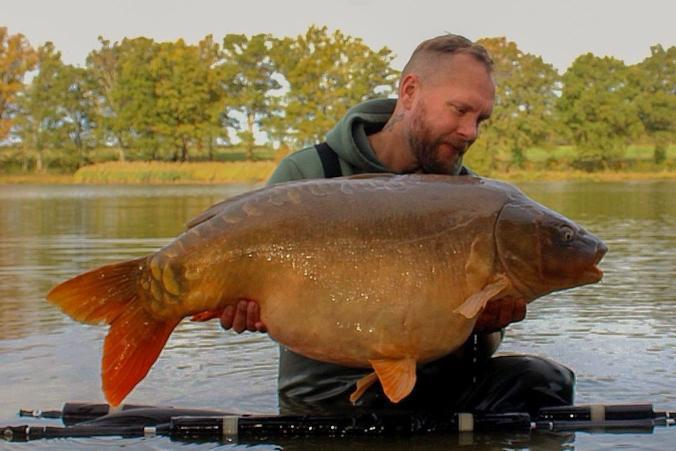
Big fish headlines are attractive, but buyers should look beyond “top weight” claims. What matters is the overall health and balance of the stock,
and whether the lake can sustain good fishing long term.
- Estimated stock numbers and biomass (relative to lake size and depth)
- Age profile and growth potential (not just current weights)
- Stocking history and any known health issues
- Evidence: stock sheets, survey results, credible catch records
If the seller can support stock claims with documented history (or an independent survey), it improves buyer confidence and helps justify valuation.
3. Property and accommodation (and what’s possible if there isn’t any)
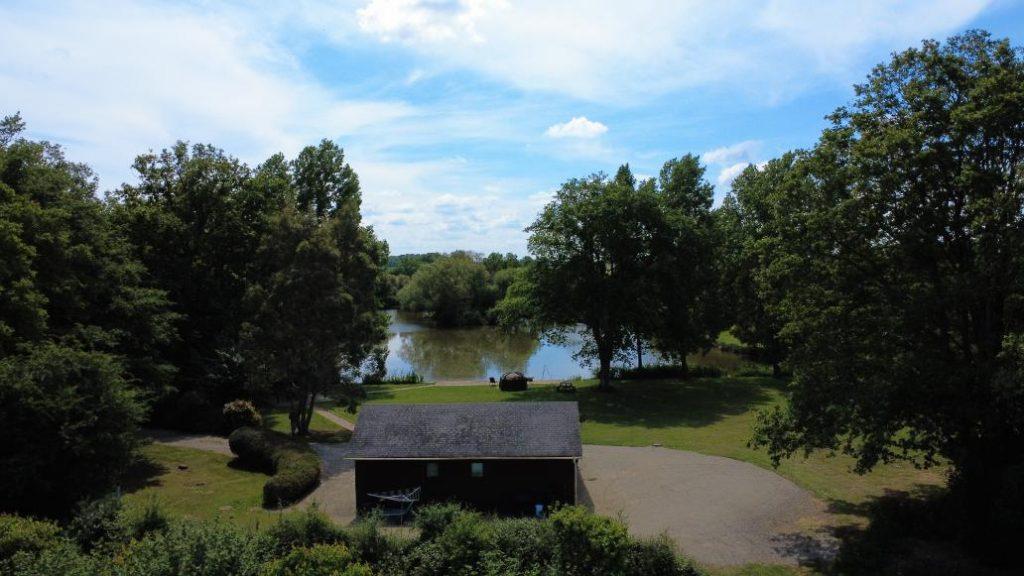
Lakes with a house, gîte, lodge, or on-site accommodation usually appeal to a wider range of buyers. They can offer immediate lifestyle value,
stronger security, and clearer income potential.
If there’s no residential property, assess what could realistically be added. The ability to erect a wooden lodge/chalet or an event-style wooden structure
(such as a social area, shelter, or simple reception building) can significantly increase appeal—subject to local planning rules.
- Check planning restrictions and what has historically been approved in the commune.
- Consider practicalities: access, services, septic, power, water supply.
- Think resale: accommodation and usable structures often broaden future buyer demand.
For a broader perspective on location considerations and what different regions can offer, see
Buying a French Carp Lake? Here’s What You Must Know.
4. Existing bookings and forward income
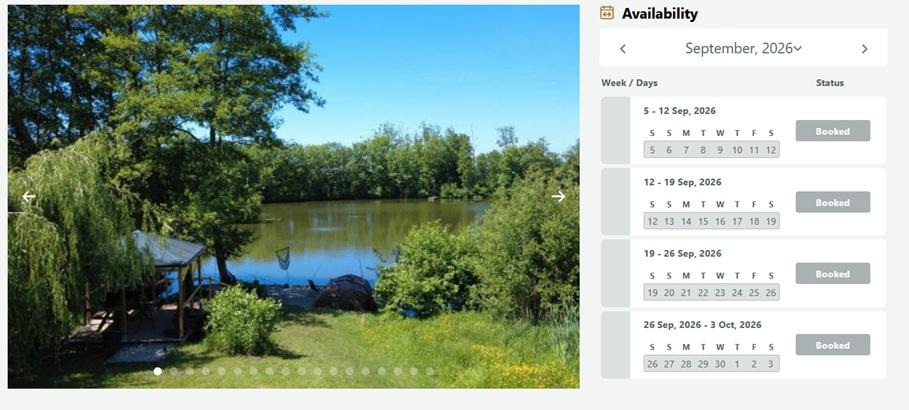
If the lake operates commercially, forward bookings are a strong indicator of market demand and can materially reduce buyer risk.
A lake with healthy future bookings demonstrates that the venue is desirable, priced correctly, and marketed effectively.
- Request booking records (with dates, durations, and deposit/payment status).
- Look for repeat customer patterns and seasonality.
- Confirm what systems are used (calendar tools, terms, deposits, cancellation rules).
Even if you plan to reposition the fishery, forward bookings can provide breathing room during the first season of ownership.
5. Accounts, operating costs, and financial transparency
If you’re buying a trading venue, clean and credible accounts matter. You’ll want to understand not only turnover, but realistic operating costs,
maintenance, and any recurring expenses that impact profitability.
- 2–3 years of turnover (minimum) where possible
- Utilities, insurance, maintenance, stocking, equipment costs
- Any staffing, cleaning, or local contractor costs
- Tax structure and compliance (if applicable)
A lake that’s well run on paper is often well run on the bank. Weak documentation increases perceived risk and can affect valuation.
6. Infrastructure and maintenance: what to inspect carefully
Walk the venue with a practical eye. Deferred maintenance can be expensive, and water-related issues can be particularly disruptive.
- Swims, platforms, pathways, and access
- Dam, spillway, drainage, water level control (where applicable)
- Security measures and boundary clarity
- Electrics, water supply, septic (if facilities/accommodation exist)
- Storage areas, machinery, and general site condition
7. Location, accessibility, and practical ownership realities
Think beyond the map pin. Accessibility impacts bookings (especially for UK clients), ongoing management, and your ability to react to issues.
Consider local amenities, nearby land use, privacy, and the general ease of looking after the venue.
If you’re a UK buyer, it’s also important to understand post-Brexit stay rules and residency options if you plan to spend extended periods in France.
A good starting point is
Can UK Buyers Buy Fishing Lakes in France After Brexit? (FAQ Guide).
8. Reputation and market positioning
In a digital market, the lake’s reputation can carry real value. Check the venue’s online presence, reviews, and how accurately it has been presented historically.
Goodwill—repeat customers, strong photos, consistent catch records—can be as valuable as physical assets.
9. Exit strategy: buy with resale in mind
Even at purchase stage, consider your future exit. Clean compliance, strong documentation, sensible infrastructure, and accommodation potential
often make resale easier and protect long-term value.
10. Use specialist listings to compare like-for-like
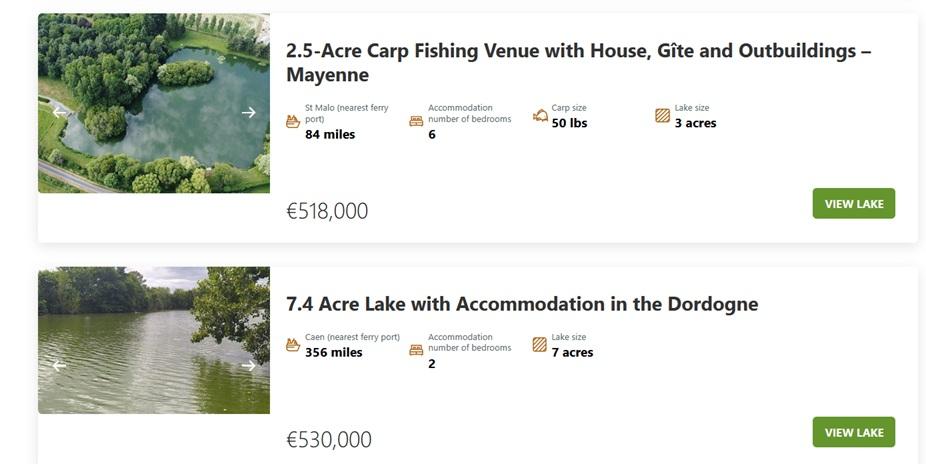
Carp lakes are niche assets. Comparing multiple listings helps you understand what’s normal, what’s exceptional, and what’s risky.
Browse our lakes for sale in France to benchmark infrastructure, stock claims, and pricing in one place.
Conclusion
Buying a carp lake in France can be a genuine lifestyle upgrade and a strong investment—if you approach it with proper due diligence.
Prioritise DDTC compliance, verify stock and documentation, inspect infrastructure, assess accounts and forward bookings, and understand what’s possible
from a planning and development perspective.
If your motivation is as much lifestyle as business, you may also enjoy:
5 Reasons to Buy a Carp Lake in France and Live the Dream Life.
Note: This article is general guidance and not legal or financial advice. Regulations and requirements can vary by prefecture and individual circumstances.