Updated November 2026.
For many carp anglers, owning a lake in France isn’t just a far-off dream. It’s the ultimate lifestyle move. Imagine stepping out of your house and straight into your swim, or welcoming paying anglers to a lake you own. With lower property prices than the UK, a strong angling culture and vast rural landscapes, France offers opportunities you won’t find at home.
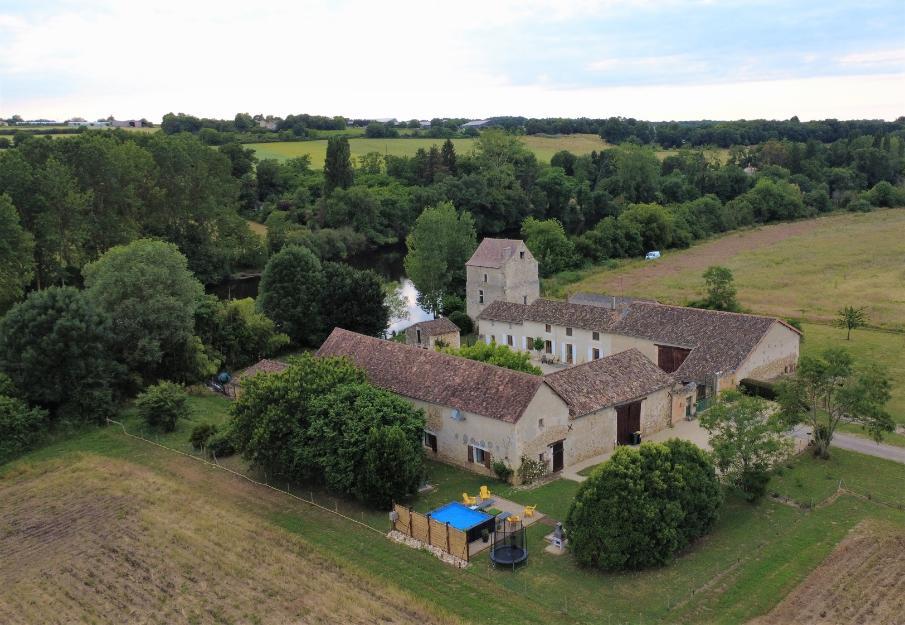
Buying a property in France can be good value for money compared to the UK
But buying a carp lake in France isn’t as simple as falling in love with a piece of water. It’s a major financial and legal commitment, and lakes differ enormously in their legal status, fish stocks and potential. This guide walks you through the whole process, step by step:
- Deciding what kind of lake you want, and where
- The real costs, including notaire fees
- The French rules that matter: the DDT, “eaux closes” and fish stocking
- A due diligence checklist to use on every lake you view
- How the purchase works, from offer to compromis de vente to completion
- The red flags that should make you walk away
Why Buy a Carp Lake in France?
Value for money
Compared with the UK, rural French property, especially land with lakes, is more affordable and offers far greater choice. In the UK, a property with a sizeable lake and land around it is out of reach for most buyers.
Lifestyle
Beyond the fishing, owning a lake in France often brings a slower pace of life, warmer summers and the chance to immerse yourself in French culture. Running a fishery does come with responsibilities, though: regular maintenance is part of the package, and sooner or later bigger jobs will need tackling.
Business potential
Carp fishing holidays in France remain hugely popular with UK and European anglers. A well-run venue with the right facilities can generate solid income, and many owners combine the lifestyle with the business, living on site while hosting anglers.
Quality of fishing
France is synonymous with big carp. Many lakes have established stocks, and the longer, warmer growing season means fish can grow on well.
If the lifestyle side appeals most, read our 5 reasons to buy a carp lake in France.
Step 1: Decide What Kind of Lake You Want
Your goal shapes everything that follows, from location to lake size to budget.
- A private lake: a retreat for family and friends, where the rules and atmosphere are entirely yours.
- A lake with a house: lakes with a house, gîte or lodge appeal to the widest range of buyers, give you somewhere to live on site and usually resell more easily.
- A commercial carp fishery: a business needing facilities, marketing and full legal compliance. Buying one that already trades gives you a head start.
Step 2: Choose the Right Location
If you plan to attract UK anglers, accessibility matters. Lakes within a few hours’ drive of Calais, Caen or St Malo are easier to market. More remote regions can offer cheaper property and stunning settings, but long journeys put some guests off. Think about airports, towns for supplies and whether the region is already popular with anglers.
Check, too, whether otters are active on nearby rivers. They are spreading across France and are fully protected, so a lake near a river may need an otter fence to protect its stock.
Step 3: Budget for the Real Costs
The asking price is only the start. When you’re buying a carp lake in France, budget for:
- Notaire fees (“frais de notaire”): around 7–8% of the price for an existing property. Most of this is taxes and duties collected by the notaire, not the notaire’s own fee.
- Agency fees: often already included in the advertised price in France (look for “FAI”, frais d’agence inclus), but check who pays.
- Surveys: a fish stock survey or netting, a check on any dam and sluices, and the standard diagnostic reports if there’s a house.
- Restocking: if the stock is thin or unproven, legally sourced carp from approved fish farms are expensive.
- Protecting the stock: otter fencing and aeration (see our guide to aerating a carp lake), if the lake doesn’t already have them.
- Running costs: insurance, local property tax (taxe foncière), electricity, maintenance, and stocking and marketing if you run it commercially.
Step 4: Understand the French Rules for Lakes
This is where most buyers from the UK get caught out. The rules below come from the French Environment Code; your notaire will confirm the position for any particular lake.
The DDT and the “police de l’eau”
Lakes and ponds in France are regulated by the DDT (Direction départementale des territoires), the state’s local department that includes the water police (police de l’eau). Every lake should be known to the water police and be covered by a regulatory act: a declaration receipt or an authorisation.
- Lakes between 0.1 and 3 hectares fall under the declaration regime; lakes of 3 hectares or more need an authorisation. These acts also set the rules for draining (vidange) the lake.
- Older lakes may be “fondés en titre”, meaning they can be shown to have existed before 1789 (for example on the Cassini maps). According to the French notaries’ own guidance, if a lake isn’t fondé en titre and no declaration was ever made to the DDT, its very existence can be challenged.
- When a lake changes hands, the new owner must notify the préfet that the benefit of the declaration or authorisation has passed to them.
Ask the seller for the DDT paperwork (or proof the lake is fondé en titre) at the start. A lake without it is a serious risk.
“Eaux closes” or “eaux libres”?
This is the single most important legal question for a carp fishery.
- Eaux closes (closed waters): the lake is configured so fish can’t pass naturally between it and a river or stream. The fish belong to the owner, and most of the general fishing rules don’t apply. That’s what lets a private carp lake set its own rules and means anglers don’t need a French fishing licence.
- Eaux libres (open waters): fish can move freely to and from a watercourse. The fish don’t belong to the landowner, and public fishing rules apply.
Closed-water status can depend on grids and filters at the inlet and outlet being kept in working order. Ask for written confirmation of the lake’s status and check those structures when you visit.
Fish stocking rules
- Fish introduced into French waters, including eaux closes, must come from approved fish farms. Ask for invoices and health paperwork for past stockings.
- Introducing species that aren’t already present in French waters without authorisation is an offence that can bring heavy fines.
- Amateur anglers are banned from transporting live carp over 60 cm, so big fish can’t legally be moved in from another lake on a whim. Treat any stock with no paper trail with caution.
Dams
If the lake is held back by a substantial dam, ask whether it is a classified dam (barrage classé). Classified dams carry formal safety, inspection and maintenance duties, which can be costly.
Planning, rural land and running a business
- Planning: adding swims, lodges, cabins or shower blocks may need planning permission, and communes vary in strictness. Check the local plan and what has been approved before.
- Rural land sales: sales of rural land are notified to the SAFER (the rural land agency), which in some cases can pre-empt a sale. Your notaire handles this.
- Running a business: hosting paying anglers means registering a business in France, paying tax and meeting safety standards. If you’re a UK citizen, read our guide to buying a fishing lake in France after Brexit for residency and length-of-stay rules.
Step 5: Due Diligence Checklist
Buying a lake isn’t just about falling in love with the setting. Validate every detail. Use this checklist on every lake you view.
Legal status
- DDT declaration receipt or authorisation, or proof the lake is fondé en titre
- Written confirmation of eaux closes or eaux libres status
- Whether the dam is classified, and any inspection reports
- Water rights: who controls inflows, outflows and sluices
- Legal access and exact boundaries
Fish stock
The value of a carp lake lies heavily in its fish. A lake with a healthy stock of big carp is worth far more than an empty water.
- Stocking records: invoices and health paperwork from approved fish farms
- Estimated numbers and biomass for the lake’s size and depth
- Age profile and growth potential, not just current top weights
- Any history of fish kills, disease or otter predation
- Credible catch records, and contact with anglers who have fished it
- Ideally, an independent netting survey
For a fisheries scientist’s view of what to look for, read Dr Bruno Broughton’s guide to assessing a French carp lake.
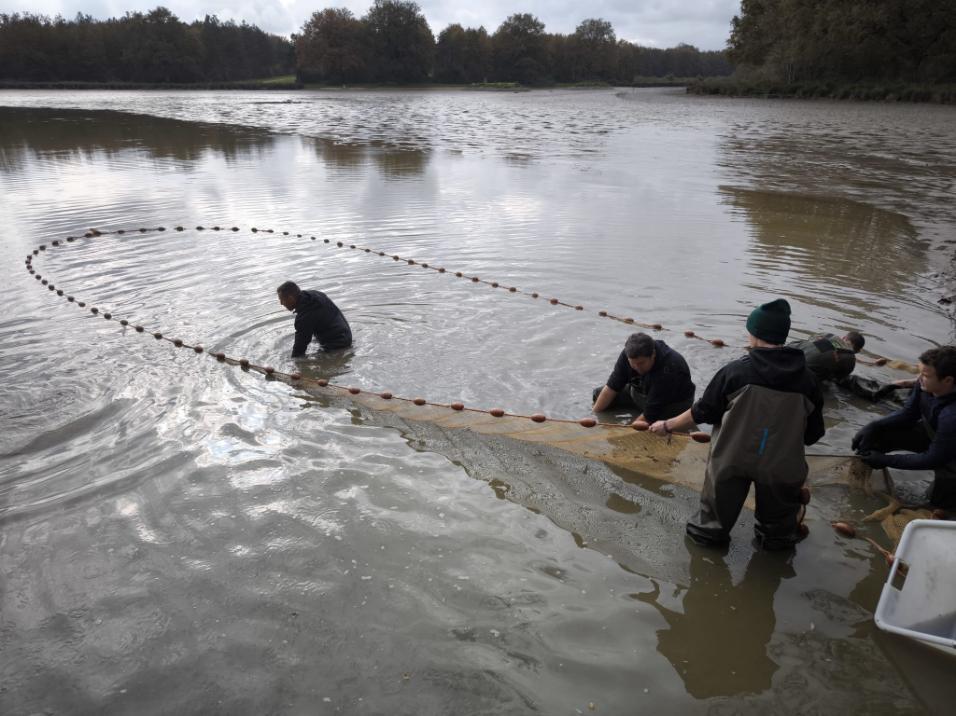
Netting is critical to the due diligence when buying a French carp lake
Property and development potential
- Condition of the house, gîte or lodges, plus septic system, water and electricity
- If there’s no accommodation, what the commune would allow you to build
- Storage, machinery and general site condition
Bookings and accounts (commercial lakes)
- Forward bookings, with dates and deposit status
- Repeat customers and seasonality
- Two to three years of turnover and realistic running costs
- The tax structure the business uses
- Online reputation, reviews and catch reports
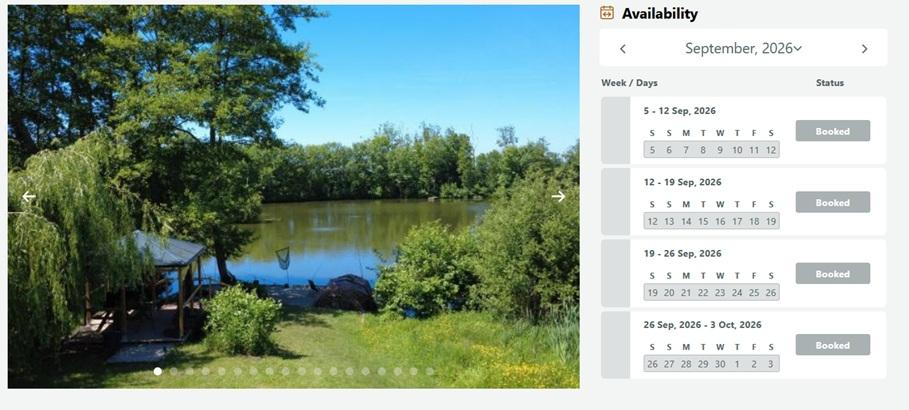
Forward bookings are one of the best signs a venue is in demand, and they give you income through your first season.
Infrastructure and risks
- Dam, spillway, sluices and banks
- Silt levels and weed
- Aeration and power supply
- Otter fencing, or the risk of otters
- Flooding, protected species and environmental restrictions
Step 6: How Buying a Lake in France Works
- Offer: once your offer is accepted, the notaire (or agent) prepares the preliminary contract.
- Compromis de vente: this binds both buyer and seller. You usually pay a deposit of 5–10% of the price, held by the notaire. A non-professional buyer of a property used as a home has a 10-day cooling-off period after signing to withdraw without penalty. If the lake has no house, ask your notaire whether this applies.
- Conditions (clauses suspensives): the compromis can make the sale conditional, most commonly on getting a mortgage. Ask your notaire about adding conditions that protect you, for example on the DDT paperwork or planning.
- Checks: the notaire carries out the legal searches, including any SAFER notification.
- Acte authentique: you sign the final deed and pay the balance and fees, usually two to three months after the compromis.
You’re entitled to appoint your own notaire, ideally one who speaks English and has handled lakes before. Where two notaires act, they normally share the fee rather than doubling it.
Buying an Existing Fishery vs. a Non-commercial Lake
Buying an existing fishery
Pros:
- Stock is established and proven
- Facilities (swims, accommodation, toilets) are already in place
- Existing bookings can provide income from day one
Cons:
- Higher purchase price
- You inherit any problems (poor maintenance, weak marketing, overstocking)
Buying a non-commercial lake
Pros:
- Often cheaper to buy
- Freedom to build your own business and brand
- More choice of location and type of lake
Cons:
- Stocking costs can be very high
- Development needs permits and investment
- Marketing and reputation must be built from scratch
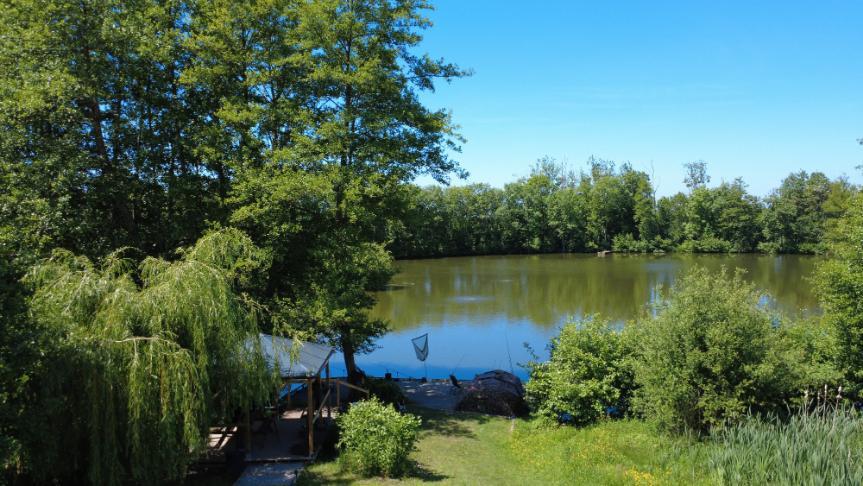
Many buyers underestimate the time and money it takes to turn a private lake into a viable business. Margins can be strong, but success takes investment, hard work and good marketing.
With hard work you can create a thriving French carp fishing business
Red Flags to Watch Out For
- No DDT paperwork: if the lake was never declared and isn’t fondé en titre, its legal existence can be challenged.
- Unclear water status: if the seller can’t show the lake is eaux closes, the fish may not legally be theirs to sell.
- No proof of legal stocking: stock with no paper trail from approved fish farms is a legal and health risk.
- Access disputes: arguments with neighbours over roads or tracks can sink a purchase.
- Inflated prices: don’t pay “dream lake” prices without evidence of income and bookings.
- Neglected infrastructure: crumbling sluices, leaking dams and silted lakes cost a fortune to put right.
- Otters on the doorstep: an unfenced lake near an otter-occupied river puts the whole stock at risk.
Making Your Lake Pay
If you plan to host anglers, bookings are what turn a lake into a business. DreamCarp Holidays lists carp lakes across France and takes bookings from UK anglers, so a new owner can start filling weeks from the first season. A lake with a track record of bookings and catch reports on DreamCarp Holidays is also easier to value and sell when the time comes.
Buying a Carp Lake in France: FAQs
Can UK citizens buy a lake in France?
Yes. Brexit changed how long UK citizens can stay in France, not their right to buy property there. See our Brexit FAQ for lake buyers.
How much are notaire fees in France?
For an existing property, budget around 7–8% of the purchase price. Most of it is taxes and duties rather than the notaire’s own fee.
What is a compromis de vente?
It’s the binding preliminary contract signed by buyer and seller, usually with a 5–10% deposit. The final deed (acte authentique) is signed a few months later.
What does the DDT do?
The DDT (Direction départementale des territoires) includes the water police, which regulates lakes: their creation, draining, and the declaration or authorisation each lake should have.
Do anglers need a fishing licence on a private lake in France?
Not on a private lake classed as eaux closes, where the general fishing rules don’t apply. On eaux libres, public fishing rules apply. This is why the lake’s status matters so much for a commercial fishery.
How long does it take to buy a lake in France?
Typically two to three months from signing the compromis de vente to completion, longer if conditions such as a mortgage or planning take time.
Ready to Start Looking?
Owning a carp lake in France can be life-changing, whether it’s a peaceful retreat or a thriving angling business. Define your goals, get expert help, and never skip the legal checks or the fish stock due diligence. When you’re ready, browse our current lakes for sale in France to compare prices, sizes and stocks side by side.
This guide is general information, not legal or financial advice. Rules can vary between départements and individual lakes, so always confirm the position with your notaire.