If there’s one part of carp fishing that separates consistent anglers from those who struggle, it’s understanding how carp move. Most anglers focus on spots — gravel patches, bars, clear areas, margins — but the best anglers spend just as much time thinking about the routes carp take between them. Carp are creatures of habit. They follow the landscape of a lake in the same way we follow footpaths or roads. And once you start seeing a lake this way, things suddenly click into place: why fish show where they do, why one cast produces and another doesn’t, and why some swims are far better at certain times of day. Patrol routes aren’t guesswork. They’re patterns. And once you learn how to recognise them, you can put yourself in front of fish far more often.
What Actually Creates a Patrol Route?
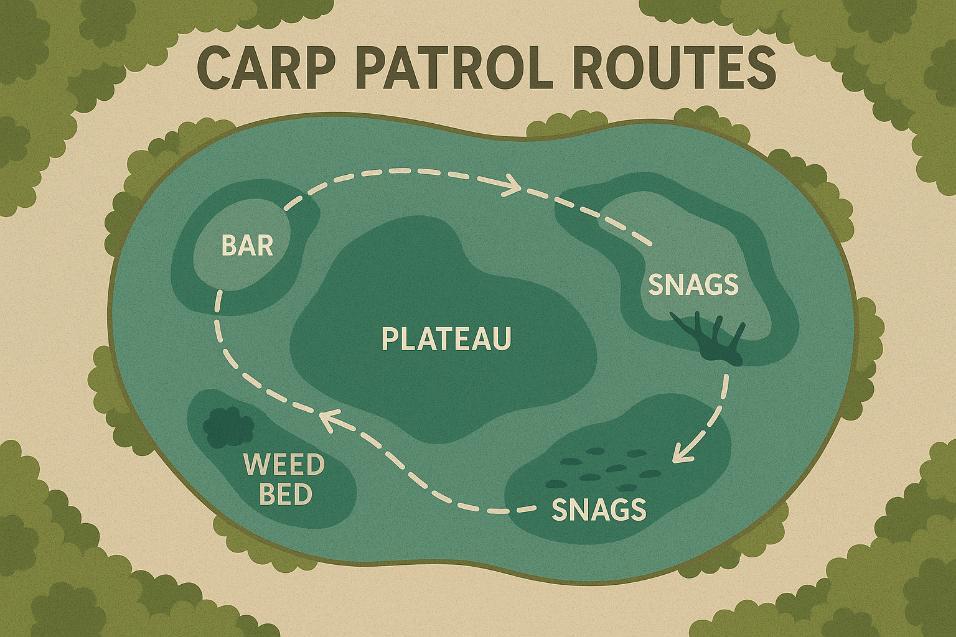
Underwater, most lakes have a natural “road system”. Carp don’t randomly drift about — they travel along lines that feel safe, efficient and familiar. Features and contours like bars, troughs, gullies, plateaus and gentle slopes all act like underwater footpaths. Carp often follow the edges of these changes, using them as reference points. Depth also plays a huge role. Carp normally move along depth contours rather than across them. A 6ft shelf running around the lake can be a major highway, especially if the surrounding water is much deeper or shallower. Cover and safety influence movement too. Snags, reed lines, tree-lined margins and weedbeds provide security, making them natural routes. Natural food also shapes carp movement. Bloodworm beds, mussel strips and soft silt pockets become regular feeding lanes. Finally, angling pressure can reshape routes entirely. Lines in the water, repeated baiting in the same areas or heavy pressure in particular swims can push carp wider or make them skirt around barriers they perceive.
The Types of Patrol Routes You’ll See
Not all routes are the same, and recognising which type you’re observing helps you predict what carp will do next. Daily movement routes are linked to temperature and light. Carp might move from deeper, comfortable water into the shallows at first light and drift back out as the sun rises. Feeding transit routes link two food areas. Carp rarely sit still and gorge; they feed in short bursts and move again, often along very repeatable corridors. Pressure-adjusted routes occur when anglers unintentionally block natural movement. Tight lines, badly placed markers, or heavily pressured areas can make carp divert around them, creating new routes that often explain why one angler gets liners all day while the next swim sees nothing.
How to Spot Patrol Routes in Real Life
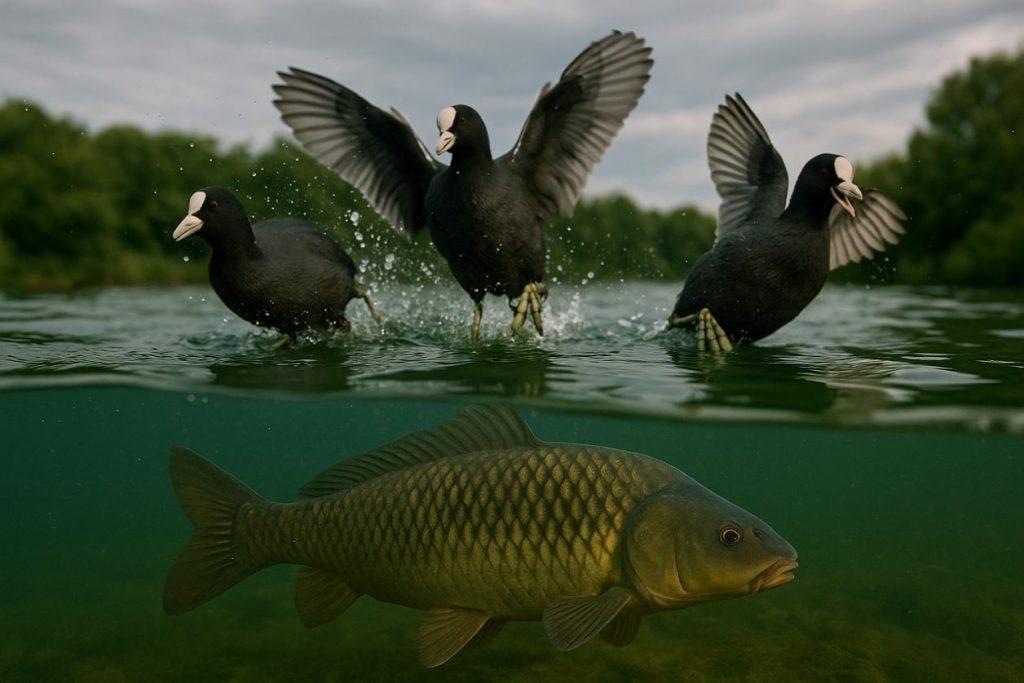
This is where watercraft comes into its own. You don’t need gadgets — just careful observation. Repeated shows in a straight line or narrow corridor are one of the clearest signs. Carp don’t randomly show along the same path over and over; they’re travelling. Fizzing that moves across the lake rather than sitting static on a spot is another giveaway. Carp feeding while travelling create a trail of small bubbles or silt disturbance. Tiny mud puffs or subtle colour changes can also reveal movement along specific lines. Bird behaviour is often overlooked but extremely useful. Coots suddenly darting off or tufties changing diving areas can indicate carp pushing through beneath them. Line bites, when they form a consistent pattern or direction, also paint a picture of movement. And whenever possible, gain height. Polaroids combined with an elevated viewpoint — a tree, high bank or platform — reveal shadows, shapes, colour changes and precise paths carp regularly take.
How Patrol Routes Change Through the Seasons
Carp don’t use the same routes all year. Their movement shifts with temperature, natural food availability and comfort. In spring, carp frequently travel between warming shallows and stable deeper water, often drifting back and forth throughout the day. In summer, weedbeds, snags and windward margins become hubs of activity. Routes often trace the edges of weed or run tight to shaded cover. During autumn, carp follow natural food more closely — mussels, bloodworm, molting crayfish — making routes tighter and more predictable. In winter, carp usually move slowly and steadily along specific depth contours. Once you identify these, they can produce remarkably reliable action.
How to Use Patrol Routes to Catch More Carp
Once you identify where carp are moving, you can position yourself to intercept them rather than hoping they stumble across your spot. Fishing on the route is about interception. Light baiting, singles, tiny traps or a small spread of boilies work best because fish are already passing by. Fishing just off the route targets holding points — small areas where fish briefly pause before filtering onto food. These spots can be incredibly productive once found. Line lay is crucial. A tight line across a patrol route is like placing a rope across a path — carp simply divert. Slack lines or careful angles make a massive difference. Baiting on routes requires restraint. Big beds of bait don’t suit moving fish. Small patches, loose spreads or stringers are far more effective. And finally, know when to stay put and when to move. Some routes are temporary and shaped by weather or angling pressure; others remain consistent for days. If a route keeps appearing elsewhere on the lake, don’t be afraid to relocate.
A Few Simple Examples
Repeated morning shows in a straight line 60 yards out might reveal a route from deeper water towards a feeding shelf. A single well-placed wafter off to the side can quickly produce. Fizzing that drifts steadily across a bay often indicates a feeding transit route; placing a rod along that line can pick off fish when they pass through. If coots keep flushing from a snag margin, it’s often carp pushing tight to cover — a well-positioned trap there at dusk can be deadly.
Conclusion
Patrol routes are one of the biggest edges in carp fishing, yet most anglers never factor them into how they approach a lake. Instead of focusing only on spots, start thinking about how carp move between them. Once you learn to read a lake this way, your fishing becomes far more consistent. You’ll waste less time in dead water, get far more feedback from what you’re seeing, and place your rigs where they stand the best possible chance of being found. Carp behave in patterns. Anglers who read those patterns catch more — it really is as simple as that.