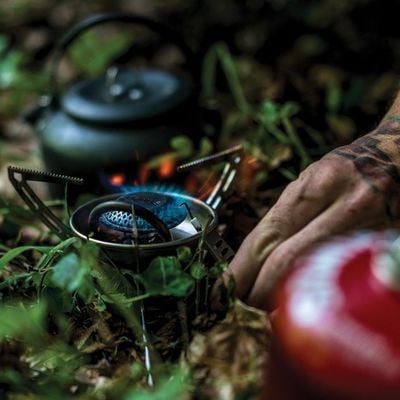
A cold night on the bank is part of carp fishing. But every winter, anglers put themselves in real danger trying to stay warm. Gas bivvy heaters, stoves, Cobbs and barbecues all give off carbon monoxide, and in a zipped-up bivvy, van or swim cabin it can build up to a fatal level while you sleep. You can’t see it, smell it or taste it.
Anglers have died this way. In December 2022, an angler night fishing on the Isle of Wight was found dead in his bivvy after bringing a camping stove inside, and an inquest later confirmed carbon monoxide poisoning. In January 2025, a British angler on a winter fishing trip in France died after lighting a small charcoal barbecue inside his campervan to keep warm, and the inquest recorded an accidental death.
That is why we’ve written the Bivvy Safety Code: 10 simple rules for using heat safely in a bivvy, with a free printable poster for your lodge, club hut or fishery noticeboard. Below the code is a full guide to bivvy heaters, stoves, carbon monoxide alarms and staying warm without a flame.
The Bivvy Safety Code
- Never fall asleep with a heater or stove on. Turn it off before you get into your sleeping bag, every time.
- Never bring charcoal, a BBQ or a Cobb inside. Not into your bivvy, van or cabin, and not even when it looks like it has gone out. Smouldering charcoal keeps giving off carbon monoxide.
- Cook outside. Use your stove in the open, or under the porch with the door fully open, never in a zipped bivvy.
- Only use heaters made for tents and bivvies. Choose one with automatic safety cut-offs, follow the instructions, and never use patio, workshop or garage heaters.
- Ventilate whenever anything is burning. Open the door and vents. Warm air isn’t worth a closed bivvy.
- Take a carbon monoxide alarm. Use a battery alarm made for caravans, boats and camping, hung near your head when you sleep.
- Know the signs. Headache, dizziness, feeling sick, drowsiness or confusion: turn the heat off and get into fresh air straight away.
- Keep gas outside. Store cylinders upright, cool and out of the bivvy, check the connections, and never change a cylinder inside.
- Stay warm without a flame. A good sleeping bag, an overwrap, a hot water bottle and dry layers do more than a heater, safely.
- Look out for each other. Tell someone your plans, check on your mates in the morning, and know the emergency number: 112 in France and across Europe.
Download the free poster: The Bivvy Safety Code (printable PDF). It’s free to print and share, and lake owners, clubs and tackle shops are welcome to put it up.
Why carbon monoxide is so dangerous in a bivvy
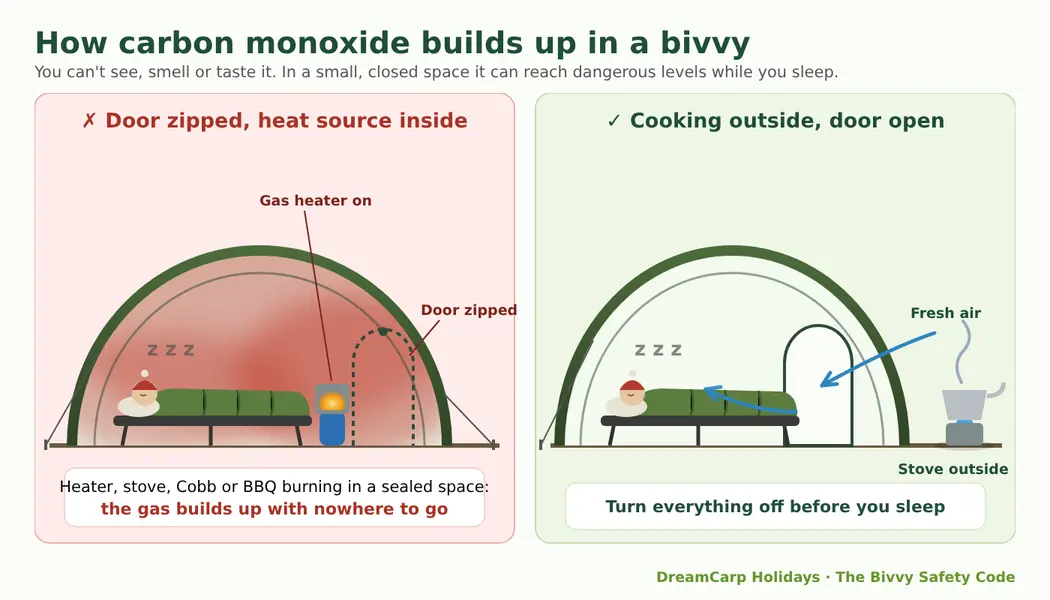
Carbon monoxide (CO) is a gas made whenever fuel burns without enough oxygen. Gas, charcoal, briquettes, petrol and paraffin can all produce it. Outdoors, it blows away. Inside a bivvy, a van or a small cabin, it builds up.
Three things make a bivvy especially risky:
- It’s a small space. A one-man bivvy holds very little air, so the gas concentration rises quickly.
- It’s sealed up in the cold. On a winter night, the door is zipped, the overwrap is on and the vents are closed to keep the heat in, which also keeps the carbon monoxide in.
- You’re asleep. The early symptoms feel like tiredness, so it’s easy to drift off and never notice them.
Carbon monoxide stops your blood from carrying oxygen. In high concentrations it can make you lose consciousness, and kill, without you ever waking up.
Are bivvy heaters safe? Heaters, stoves, Cobbs and BBQs compared
A bivvy heater can take the edge off a cold night, but how safe it is depends on what it burns. Here’s how the main options compare.
Charcoal, BBQs and Cobbs
Never use these inside a bivvy, van, cabin or any closed space. Charcoal and briquettes give off a lot of carbon monoxide, and they keep doing so long after the flames have gone and the food is cooked. A barbecue that “looks out” and is brought inside for warmth is one of the most dangerous things you can do on a cold night. Cook outside, and leave it outside to burn out completely.
Gas stoves
A stove for a brew or a meal is fine outside, or under an open porch with plenty of air moving. Don’t cook in a zipped bivvy, and never leave a stove running to heat the bivvy. Stoves are made for cooking, not heating.
Gas bivvy heaters
Gas bivvy heaters burn fuel, so they make carbon monoxide. If you use one, choose a heater designed for tents and bivvies. Check that it has automatic safety cut-offs, such as a low-oxygen sensor and a tip-over switch, and that it’s in good condition. Even then:
- keep the door or vents open while it’s running
- keep it clear of your sleeping bag, clothes and bivvy walls
- turn it off before you sleep
- never use a patio, workshop or garage heater in a bivvy
Electric and battery bivvy heaters
Electric and battery-powered bivvy heaters have no flame, so they don’t produce carbon monoxide. That makes them the safest type of bivvy heater. They give out less heat than gas and need a power source, such as a hook-up at the lake or a portable power pack. Follow the maker’s instructions, keep them clear of bedding and wet kit, and check cables and plugs before every trip.
Candle and tea-light bivvy heaters
Candle and tea-light heaters give out very little heat, but they still burn. That means a fire risk close to bivvy fabric and sleeping bags, and they use up oxygen and add fumes in a closed bivvy. Never leave one burning unattended, keep the bivvy ventilated, and never fall asleep with one lit.
Generators and engines
Never run a generator or car engine near your bivvy door, and never sit in a parked car with the engine running for warmth if the exhaust could be blocked.
Carbon monoxide alarms: the cheapest life-saver on the bank
A carbon monoxide alarm is the only way to know if the gas is building up. They’re small, battery-powered and inexpensive.
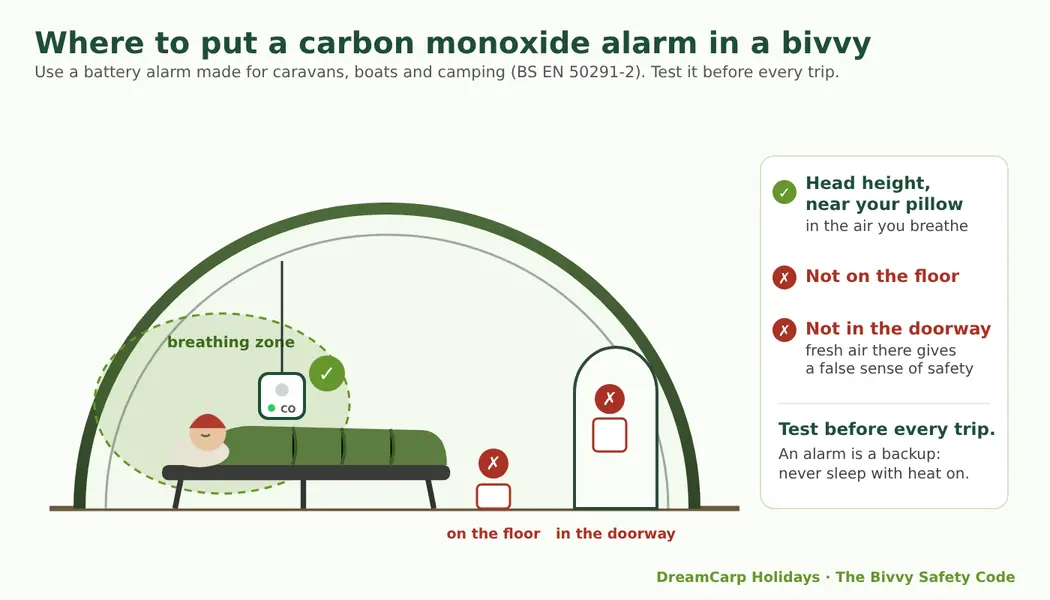
- Choose the right type. Look for a travel carbon monoxide alarm made for caravans, boats and camping. In the UK these are tested to BS EN 50291-2, the standard for recreational vehicles and boats. They’re tougher than household alarms and cope better with being moved around.
- Put it in the right place. Hang it at head height near your bedchair, not on the floor and not right by the door. Carbon monoxide mixes with the air, so you want the alarm where you’re breathing.
- Test it before every trip and replace the batteries as the instructions say.
- Never ignore it. If it goes off, turn off anything burning and get out into fresh air.
An alarm is a backup, not a reason to take risks. Follow the rest of the code as well.
Signs of carbon monoxide poisoning, and what to do
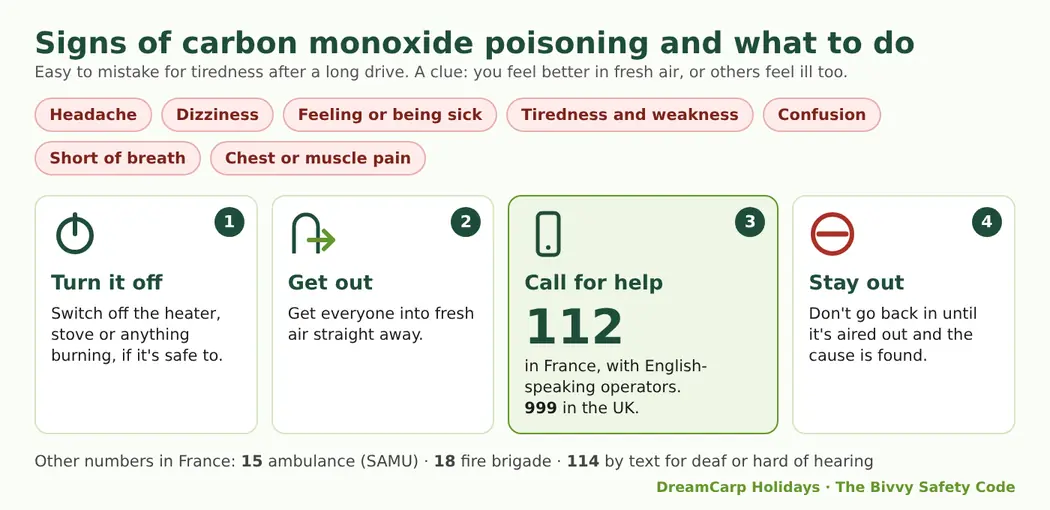
According to the NHS, the symptoms of carbon monoxide poisoning include:
- headache
- dizziness
- feeling or being sick
- weakness and tiredness
- confusion
- shortness of breath, and chest or muscle pain
On the bank, it’s easy to put these down to a long drive, a few beers or a cold night. A big clue is that you feel better once you’re out in the fresh air, or that more than one person in your group feels unwell.
If you suspect carbon monoxide:
- Turn off the heater, stove or anything burning, if it’s safe to do so.
- Get yourself and anyone else out into fresh air straight away.
- Get medical help. If someone is struggling to breathe, confused, drowsy or unconscious, call for an ambulance: 112 in France, or 999 in the UK.
- Don’t go back into the bivvy, van or cabin until it has been aired out and the cause is found.
How to stay warm in a bivvy without a heater
Most experienced winter anglers don’t rely on a bivvy heater at all. Heating a bivvy safely is mostly about insulation and staying dry, not adding a flame. (For catching as well as keeping warm, see our winter carp fishing tips.)
- Sleeping bag: use a winter-rated bag, ideally with a thermal cover over it, and get into it with dry clothes on.
- Overwrap and groundsheet: an overwrap reduces condensation and keeps the bivvy noticeably warmer, and a groundsheet stops the cold coming up from the ground.
- Bedchair: a good mattress or underlay stops the bedchair drawing heat away from you.
- Hot water bottle: boil the kettle outside, fill a hot water bottle and put it in your sleeping bag. It’s simple and it works.
- Layers: thermal base layers, a hat and dry socks for the night. Change out of damp clothes before you get into your bag.
- Hot food and drink: a hot meal and a warm drink before bed, both made outside.
- Electric options: rechargeable heated jackets, gloves and blankets produce no fumes. Use them as the makers intend, and don’t charge them overnight inside your sleeping bag.
Fishing in France: what to know
Many UK anglers fish French lakes in early spring, late autumn and winter, when nights can be very cold. A few things are worth knowing before you go.
Emergency numbers in France
- 112: the European emergency number. It works from any phone, including UK mobiles, and there are English-speaking operators.
- 15: SAMU (ambulance and medical emergencies).
- 18: sapeurs-pompiers (fire brigade, who also respond to many medical emergencies).
- 114: emergency number by text, for people who are deaf or hard of hearing.
Save the lake owner’s number in your phone as well, and make sure someone in your group knows the lake’s address, so you can tell the emergency services where you are.
Taking gas over to France
LeShuttle (Eurotunnel) and the ferry companies limit how much gas you can carry and may ask you to declare it at check-in. LeShuttle, for example, allows up to 47kg per gas cylinder and 50kg per vehicle. Check your operator’s current rules before you travel, keep cylinders upright and secure, and make sure the valves are closed. If you’re still to book, you can compare ferry and Eurotunnel crossings here.
Cabins, lodges and drive and survive lakes
The same rules apply in an anglers’ cabin, a swim hut or a lodge as in a bivvy: never bring a barbecue or Cobb inside, keep doors and vents open when you’re cooking, and take your CO alarm with you. Many of our drive and survive carp fishing lakes in France have communal cabins with kitchens for cooking, and our lakes with carp fishing in France with accommodation give you a proper bed on cold nights. Always follow the lake owner’s own rules on stoves, heaters and barbecues.
Bivvy safety FAQs
Are bivvy heaters safe?
They can be, if you choose the right type and use it properly. A gas bivvy heater must be designed for tents and bivvies, with automatic safety cut-offs, used with the door or vents open, and switched off before you sleep. Never use charcoal, a BBQ, a Cobb, or a patio or workshop heater in a bivvy.
What is the safest bivvy heater?
An electric or battery-powered bivvy heater, because it has no flame and gives off no carbon monoxide. Safer still is not needing a heater at all: a winter sleeping bag, an overwrap, a hot water bottle and dry layers.
Are candle bivvy heaters safe?
They’re a fire risk near bivvy fabric and bedding, and they still burn in a closed space. Keep the bivvy ventilated, never leave one unattended and never sleep with one lit.
Can I use a Cobb in my bivvy to keep warm?
No. A Cobb burns charcoal or briquettes, which give off large amounts of carbon monoxide, even when the flames have died down. Use it outside, and let it burn out completely outside.
Do I need a carbon monoxide alarm for fishing?
If you ever cook or use any heat near your bivvy, yes. A battery alarm made for caravans, boats and camping (BS EN 50291-2) is small, cheap and could save your life.
Where should a carbon monoxide alarm go in a bivvy?
At head height near where you sleep, not on the floor and not right by the door, so it measures the air you’re breathing.
Can carbon monoxide build up with the bivvy door open?
Good ventilation greatly reduces the risk, but doesn’t remove it, especially with charcoal or a faulty heater. Keep the alarm on and never sleep with anything burning.
Share the code
The Bivvy Safety Code is free for anyone to print, share or link to. If you run a lake, a club or a tackle shop, put the printable poster up in your lodge or on your noticeboard. If you share it on your website, please link to this page so people can find the full guide. And if you’re heading out on a cold night this winter, take a minute to remind your mates.
For more on looking after the fish as well as yourselves, read our Carp Care Code. If you’re planning your first carp fishing trip to France, our guide covers everything else you need to know.
This guide gives general safety information and isn’t a substitute for medical advice or the manufacturer’s instructions for your equipment. If you think someone has carbon monoxide poisoning, get medical help straight away.